
The Dutch government has pursued an active host country policy since 1988. Today, the Netherlands hosts nearly 40 international organisations and around 100 embassies, with a strong concentration in The Hague as “International City of Peace and Justice”. Through this policy, the Netherlands seeks to contribute to the international legal order, strengthen its international network and reputation, and generate economic benefits. At the same time, hosting many organisations creates practical and policy challenges.
On request of the interministerial Working Group on Intergovernmental Organisations (RIO), the Policy and Operations Evaluation Department (IOB) is conducting an evaluation of the interministerial coordination of the Dutch host country policy. These findings will inform a revised policy note on host country policy that is planned to be sent to Parliament in 2027.
Main focus and questions
The evaluation concentrates on how the Dutch government organises and coordinates the host country policy across ministries, agencies and levels of government, and on the role of the Ministry of Foreign Affairs as coordinating ministry. It does not assess the effects of the presence of international organisations on Dutch society and economy, nor on the international reputation or international legal order.
The evaluation addresses three main questions:
1. To what extent does the central government’s organisation of the host country policy meet the requirements for an effective, coherent, and implementable host country policy, and what is the added value of the coordinating Ministry of Foreign Affairs within this government-wide organisational structure?
2. To what extent are the international organisations based in the Netherlands satisfied with the Dutch host country policy?
3. What improvements could make the host country policy and its coordination more effective?
The evaluation will result in a public report in Dutch (with English summaries) that will be shared with Parliament and made available to international organisations.
Process
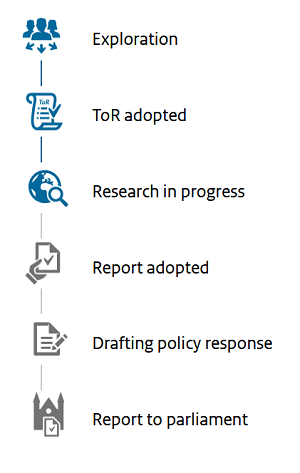
The Terms of Reference has been published on the Dutch website. You can download the Dutch file here.
Researchers
- Rafaëla Feddes, contact person
- Stephanie Bouman
- David Röling
- Ruth van Zorge
- Eline Westerman