
In response to Houthi attacks on international merchant and navy ships in the Red Sea area, since 2023, the Netherlands contributed to three military operations and a diplomatic track. IOB researched to what extent the Dutch goals were achieved and what lessons can be learned for future operations.
Background

Since November 2023, the Red Sea is a cauldron of geopolitical tension in the Middle East. From Yemen, the Houthis started attacking international merchant and navy ships, purportedly out of solidarity with Gaza. These attacks threatened shipping and freedom of navigation on a crucial trade route.
In response, the Netherlands decided to contribute to diplomatic efforts to de-escalate and to three military operations:
- Operation Prosperity Guardian, by means of the deployment of HNLMS Tromp and staff officers
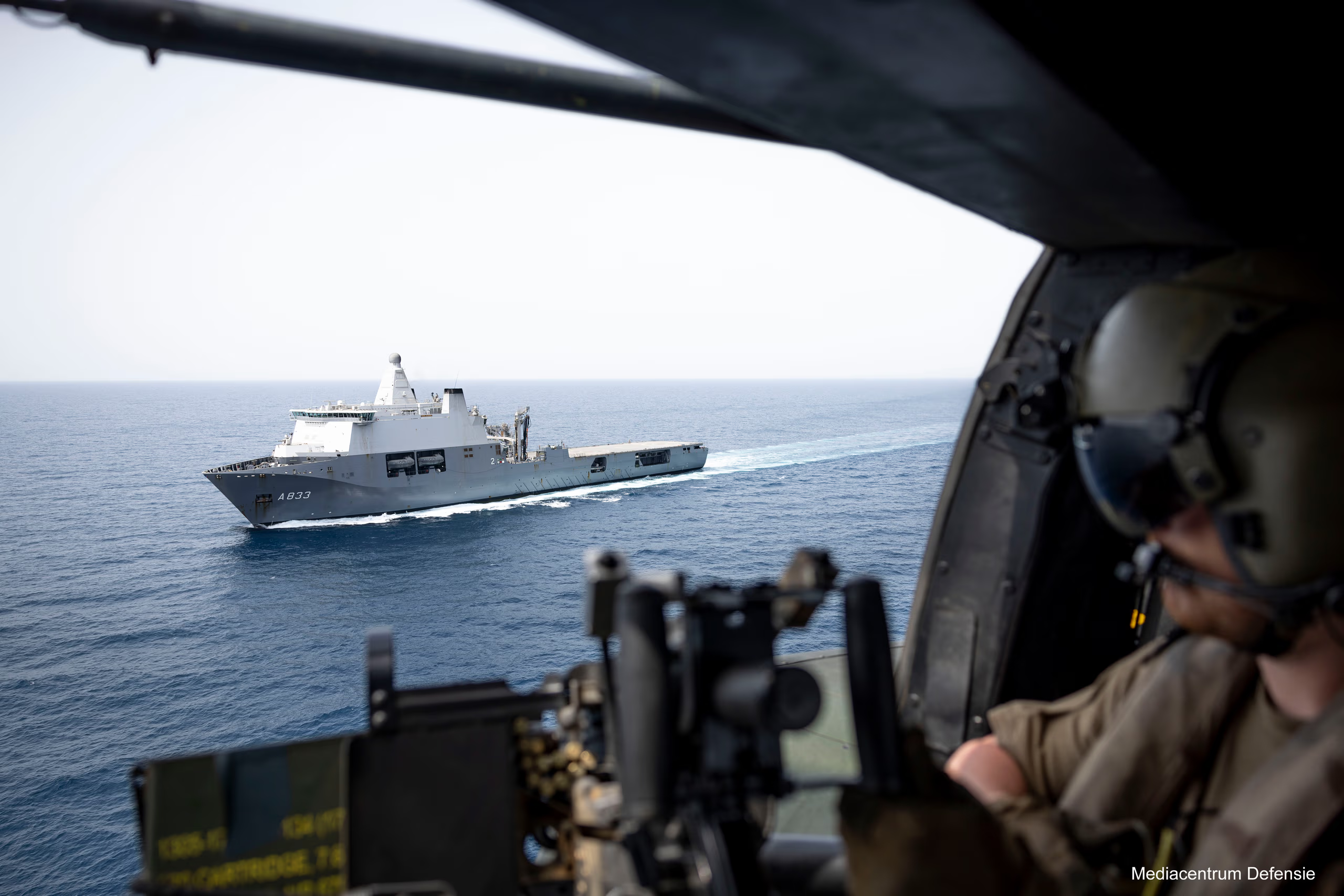
- EUNAVFOR Aspides, by means of the deployment of HNLMS Karel Doorman and staff officers
- Operation Poseidon Archer, by deploying a staff officer
Research
IOB evaluated the Dutch military and diplomatic efforts, primarily in the period between the start of the Houthi attacks in November 2023 and the departure of HNLMS Karel Doorman from Operation Aspides on 8 August 2024. The central research question was:
To what extent have the integrated Dutch efforts for maritime security in the Red Sea region achieved their objectives, how can this be explained, and what lessons can be learned for future Dutch contributions to missions and operations?
IOB elaborated on this question by means of three building blocks: 1) decision making and set up, 2) performed activities and achieved results, 3) achievement of goals. The research involved semi-structured interviews with 71 respondents and an analysis of external and internal documents of the military operations and the involved Dutch ministries.
Conclusions

In summary, the main conclusions of the report are:
- There was a discrepancy between the modest objectives of the Dutch military contributions and the ambitious operational objectives of OPG and Aspides.
-
The objectives of the Dutch military contributions have largely been achieved. Dutch military personnel, policymakers and diplomats were capable and responded flexibly to the changing context.
-
The ambitious operational objectives of Operation Prosperity Guardian and Aspides - restoring or maintaining freedom of navigation and contributing to maritime security - have only been partially achieved.
-
The operational objectives—‘restoring’ (Operation Prosperity Guardian) or ‘maintaining’ (Aspides) freedom of navigation and contributing to maritime security—have only been partially achieved.
-
Several factors hampered the effectiveness of Operations Prosperity Guardian and Aspides. 1) neither operation addressed the root cause of the insecurity—the Houthis’ capacity and intention to attack—and both were limited to protecting merchant ships, 2) too few ships could be deployed in the operations to protect all shipping traffic, 3) the EU operation Aspides lacked several preconditions for effective military action (for example a solid command structure and sufficient intelligence).
-
The deployment of naval ships was intended to send a signal to the Houthis and other malicious actors that such violations of freedom of navigation would not be tolerated. This signal, however, did not deter the Houthis from continuing their attacks.
-
Despite the minimal diplomatic momentum and limited Dutch sphere of influence, the Netherlands achieved diplomatic results; still, peace in Yemen and de-escalation in the region remained elusive during the evaluation period.
Image: © BlauwZAND/DKK
Recommendations

Based on the above conclusions, five recommendations have been formulated, which have been further elaborated in the report.
The objectives of the Dutch military contributions were modest and realistic. However, the operational objectives — which were formulated not by the Netherlands, but by the coalition — were very ambitious. Although the preliminary picture of the conflict situation and the functioning of the operations is incomplete, the Article 100 letter should better address potential limitations to the feasibility of operations and, in appropriate cases, better justify the Netherlands’ decision to participate.
Aspides lacked key preconditions for effective military action. In the Netherlands, there is a policy desire to strengthen the EU militarily and reduce the dependence on the US — also in light of the Russian threat. If the Netherlands wants stronger European missions and operations in the future, it will also have to contribute the necessary capabilities. Furthermore, the Netherlands would be wise to press Brussels for strengthening the preconditions for effective action, such as a more solid command structure and intensified intelligence cooperation.
The Ministry of Defence deployed its units with the best available military assets. Such assets are often expensive. The Red Sea conflict — as the war in Ukraine, for example — demonstrated that an adversary which poses an asymmetric threat (e.g., using cheap drones) can force the Netherlands and its allies to deploy scarce, high-quality, and expensive defense systems. Such an asymmetric war is expensive and difficult to sustain in the long term. Therefore, it is crucial for the Netherlands to continue investing in more efficient defence methods and resources against asymmetric threats.
During the Red Sea conflict, three military operations were set up, with the two maritime operations pursuing virtually identical objectives. A combined military effort might have been more efficient. Given the fragmented international efforts, the Netherlands was wise to maintain at least a minimal presence in the various operations. This gave the Netherlands a good intelligence position and contributed to several alliances (with the US and the EU).
However, the deployment of staff officers was sometimes very brief; a longer deployment is necessary to build relationships and more thoroughly understand the operation. If a similar situation arises in the future, it might be advisable for the Netherlands to participate in multiple operations again, with a view to contributing to important alliances and attaining operational advantages.
At the start of the Red Sea crisis, there was little diplomatic momentum for de-escalation, and the Houthis welcomed a military escalation. The Netherlands had realistic expectations of achieving diplomatic goals at the time, and strove to keep diplomatic channels open with key players in the region. The Netherlands questioned the Houthi narrative of solidarity with Gaza as a justification for its attacks on merchant shipping.
Nevertheless, the October 2025 ceasefire in Gaza — combined with the heavy American and Israeli attacks on the Houthis — may offer new diplomatic momentum for de-escalation and a path to regional peace that the Netherlands could contribute to.
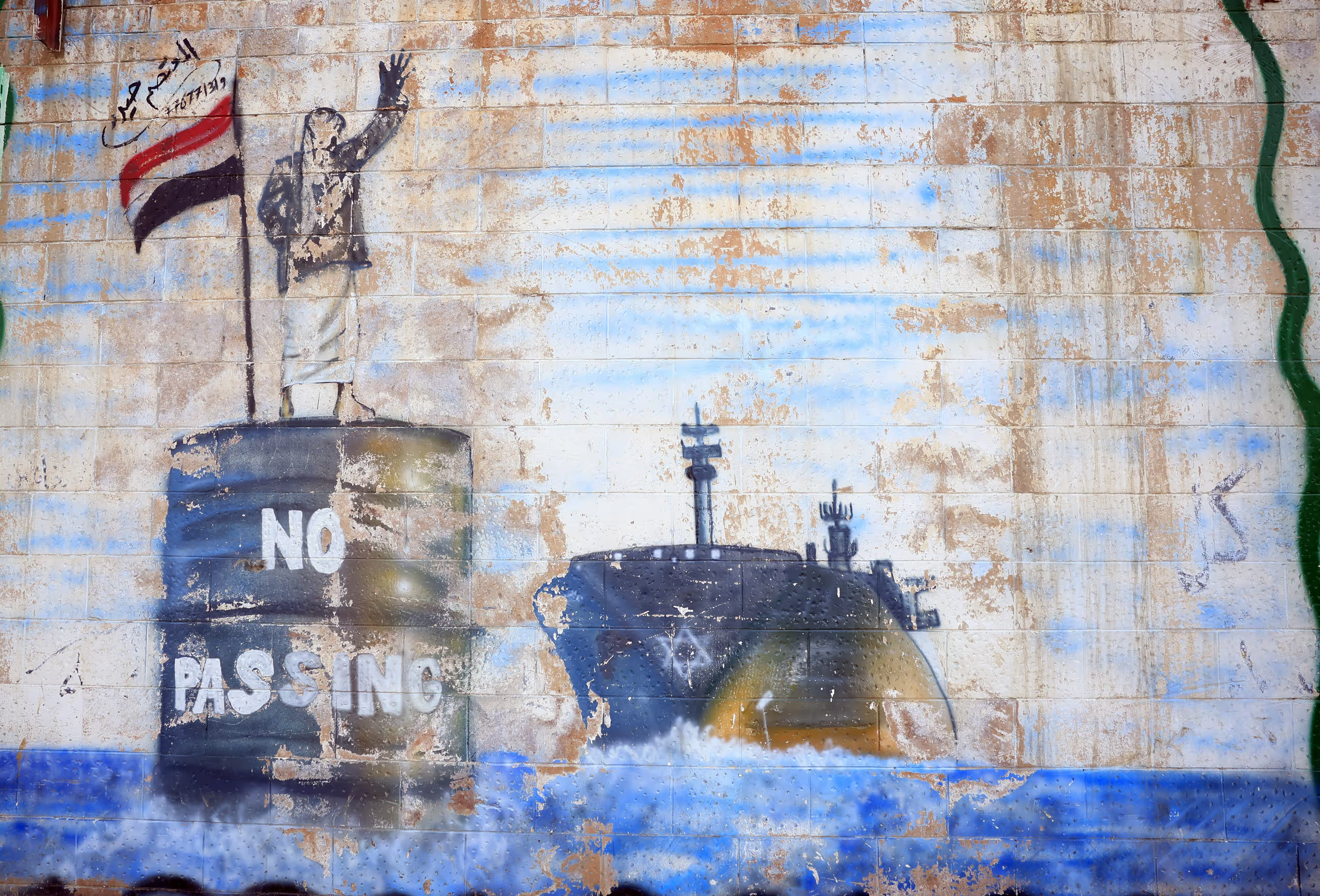
Mural in Sana’a shows Houthi stopping Israeli ship. 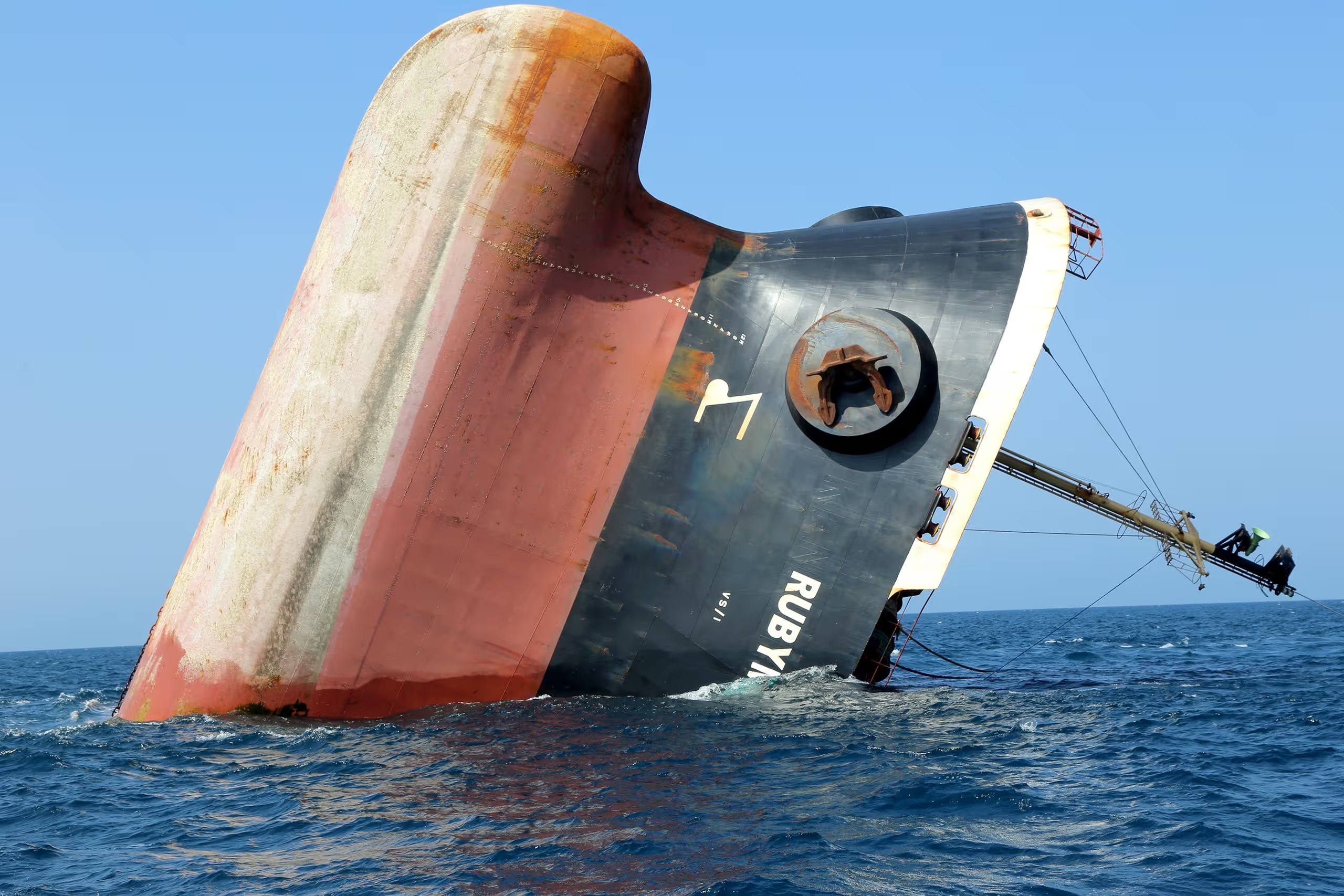
Cargo ship Rubymar sunk by Houthis. 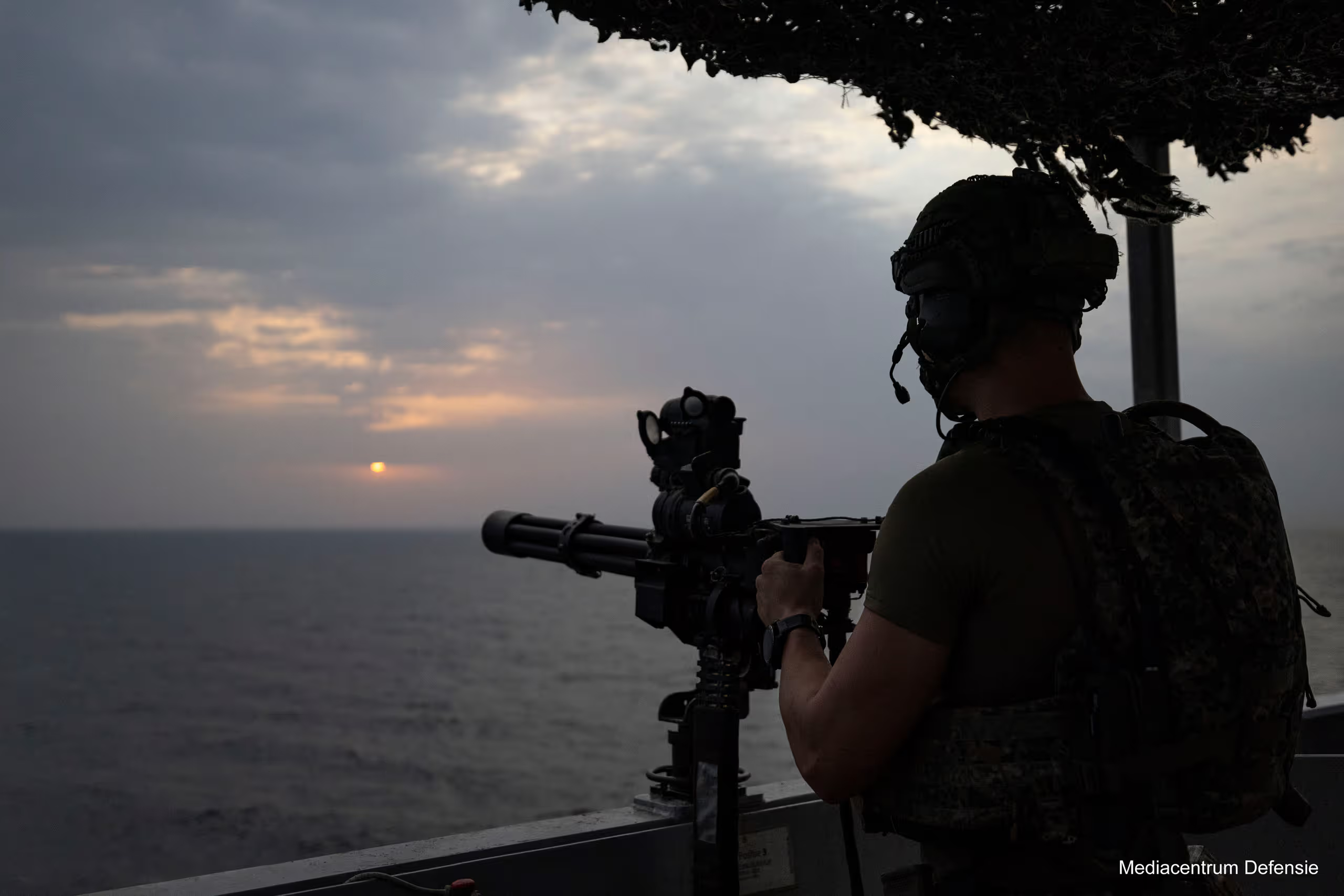
Combat watch on Zr.Ms. Karel Doorman in the Gulf of Aden.